








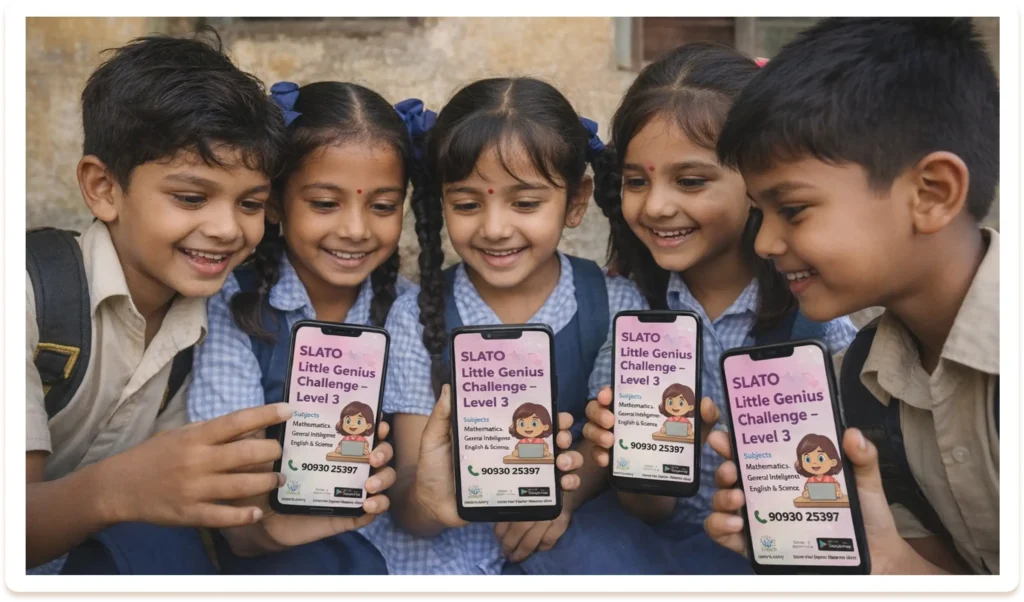
Level 3 of the SLATO Exams was intentionally designed to be different. Highly conceptual, deeply analytical, and far removed from routine textbook-based questions, it demanded depth of understanding, clarity of thought, and the courage to think differently. Naturally, there were concerns would students be able to adapt to such a shift? The answer, as it unfolded, was far more inspiring than anticipated.
As the journey progressed from Level 1 to Level 3, the difficulty increased steadily. Yet, when we look closely at students who participated across multiple levels, a clear pattern begins to emerge. With the right exposure, consistent guidance, and meaningful challenges, young minds do not just cope they evolve, often at a remarkable pace.
One such story is that of Risha Mondal. She scored 70% in Level 1, enrolled for Level 2 but could not appear due to unavoidable circumstances, and then returned in Level 3 to score an exceptional 96%. What makes this achievement extraordinary is that Level 3 was significantly tougher than Level 1. Her journey reflects resilience, growth, and the quiet rebuilding of confidence that true learning often brings.
Another powerful example is Anushree Saha, whose performance speaks of consistency refined by effort. She scored 96% in Level 1, 90% in Level 2, and went on to achieve a perfect 100% in Level 3. With each stage becoming more complex, her trajectory highlights not just talent, but the discipline to adapt and improve with every challenge.
Equally remarkable is the performance of Md Rakibul Alam Sheikh, who demonstrated extraordinary consistency by scoring a flawless 100% across all three levels. Maintaining perfection through progressively tougher assessments is no small feat—it reflects focused preparation, deep conceptual clarity, and unwavering commitment.
The rigor of Level 3 is perhaps best understood by looking at the results as a whole. In Levels 1 and 2, nearly 30 students secured Rank 1 or emerged as toppers. In Level 3, that number dropped sharply only two exceptional students could hold Rank 1. This shift was not incidental; it highlighted the true depth of the assessment and what excellence genuinely means at this stage.
What adds even greater meaning to these achievements is the background from which many of these students come. Within a span of just six months, students who once lacked exposure, confidence, and direction particularly those from remote rural regions with limited digital access are now competing confidently alongside their urban, digitally privileged peers. Through the SLATO Exams initiative, talent that had long remained unseen is finally finding space to express itself.
These stories quietly remind us why this journey began not merely to conduct exams, but to discover potential, restore belief, and create pathways where none seemed possible. And as these young learners continue to grow, adapt, and surprise us, one cannot help but look ahead with gratitude, curiosity, and hope for all that is yet to unfold.