




Field diary — 9th and 10th September 2026, Palashipara Adarsha Shishu Niketan
This one is in my own hometown, which does not happen often.
I asked Khairul to meet me at the Saibnagar bus stand at ten. He was on time, as usual, and we reached Palashipara Adarsha Shishu Niketan by half past. We had two trophies and two report cards with us, and a plan to hand them over quietly to the teachers who had won them.
The school had other ideas.
In Front of the Whole School
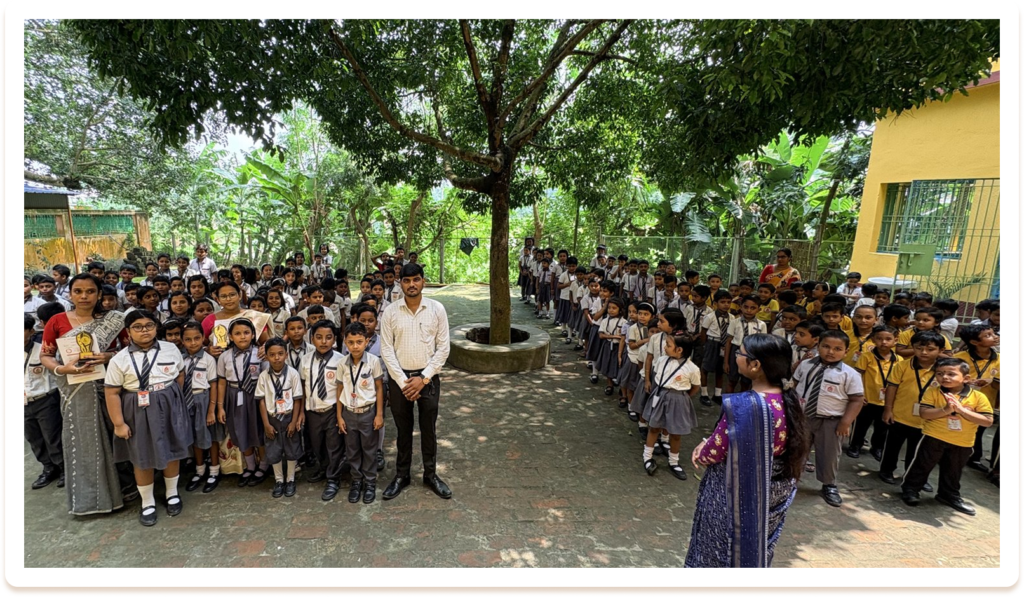
We arrived to find the assembly forming. Every student in the school was out on the assembly ground, lining up.
We went to the principal first and told her we had come to present the Teacher of the Month awards for July. She did not suggest we wait for a quieter moment. She suggested we do it there — at the assembly, in front of everybody.
The whole school is on the assembly ground. Not the handover we had planned.
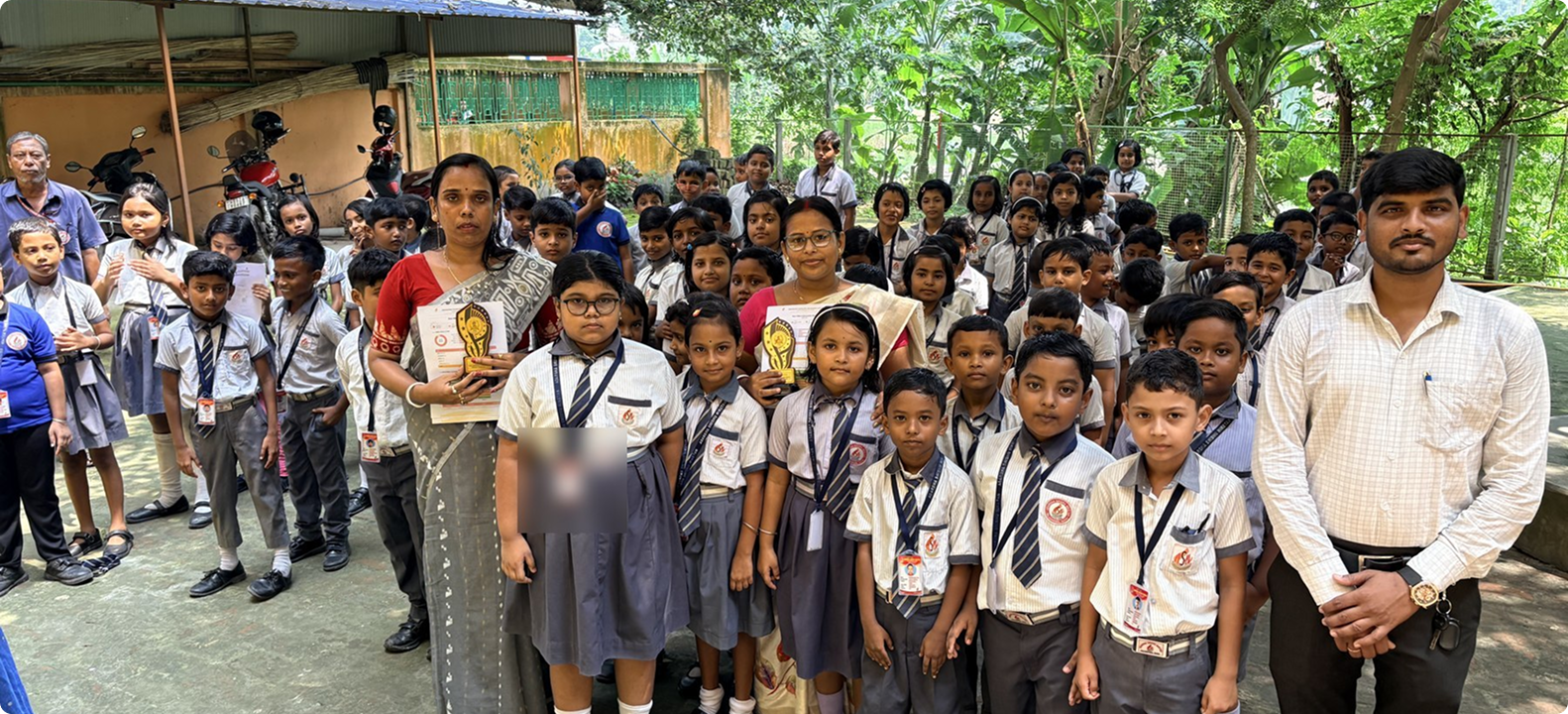
The two winners, surrounded by the people the award is actually about.
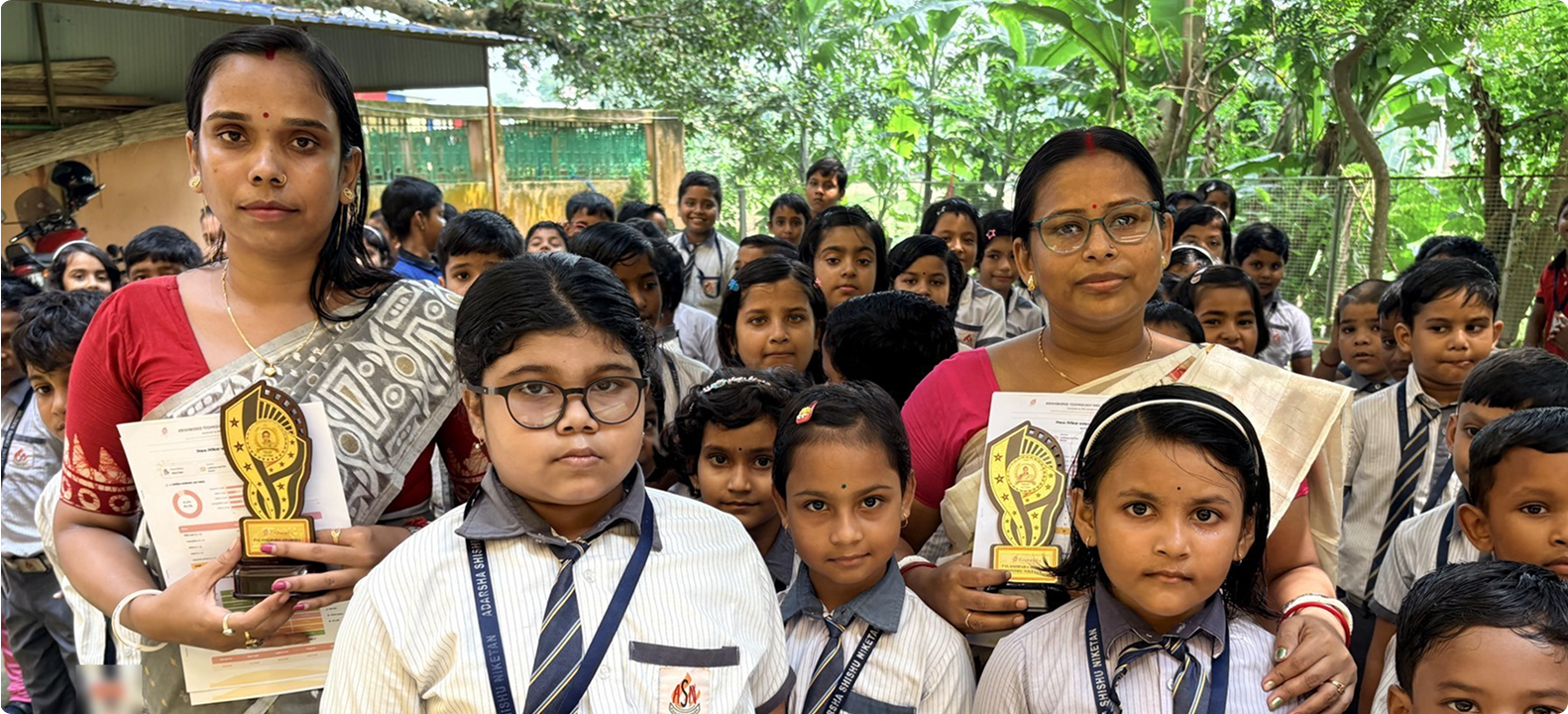
Trophy in one hand, report card in the other. The report is printed in Bengali.
The winners for July were Shostika ma'am and Ria ma'am. We gave a short speech, and then handed each of them a trophy and her performance report card while several hundred children watched.
The difference between handing someone a trophy in a staffroom and handing it to her in front of her students is not a small one:
"The teachers feel very proud after getting the trophy in front of the students."
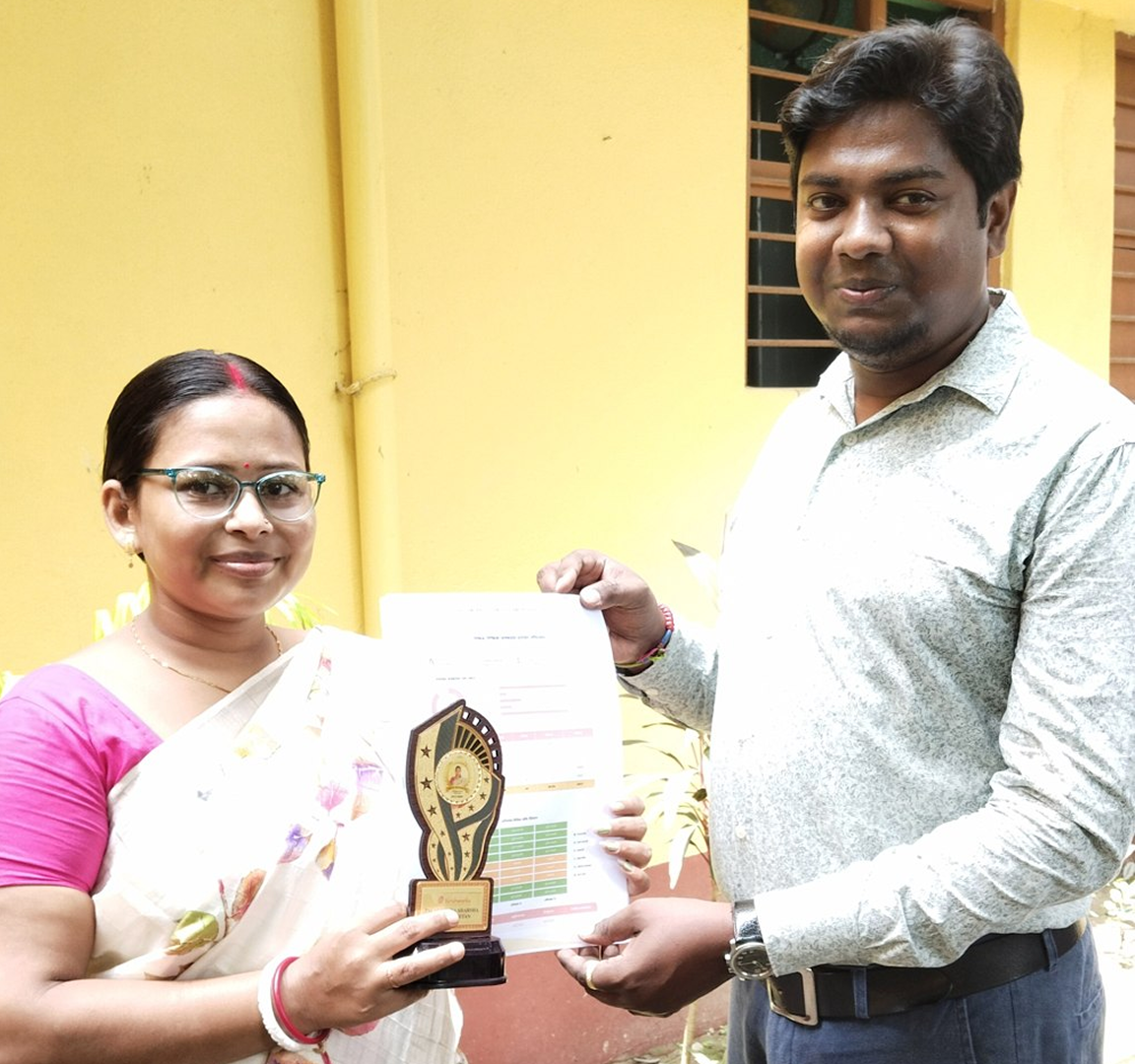
The handover.
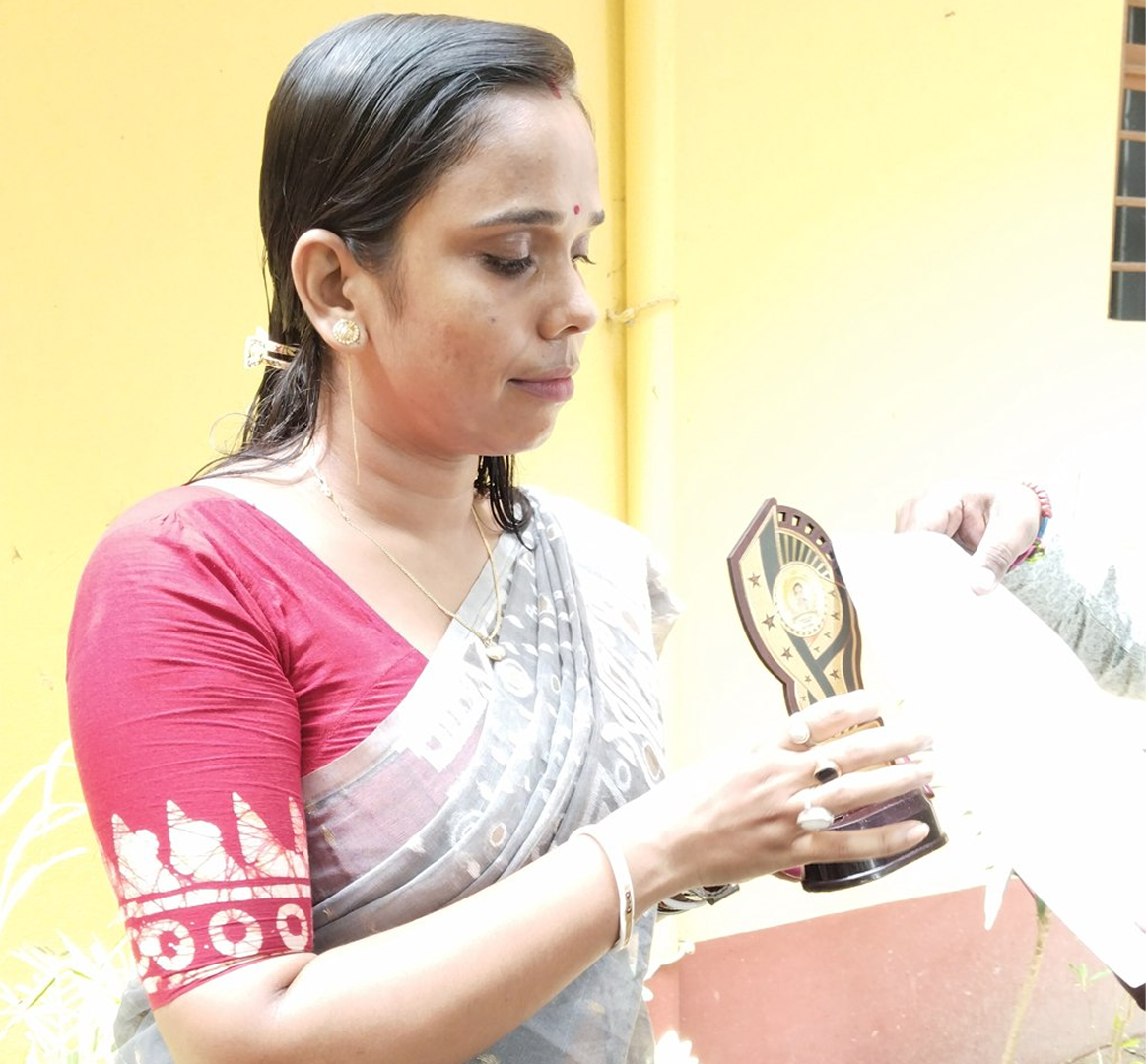
A moment to actually look at it.
We told them plainly that this was the result of hard work, took photographs and some testimonial videos, and the assembly closed with the national anthem.
Afterwards, in her office, the principal was generous about the programme — and specific about why she thought it was working. Her teachers, she said, are setting assignments on time, and preparing before class rather than during it. The students are improving as a result.
And Then: A Diagnostic Test. Today.
As we were leaving, the principal mentioned that the school was planning its diagnostic test — that same day.
So we stayed, and the test ran across the 9th and the 10th.
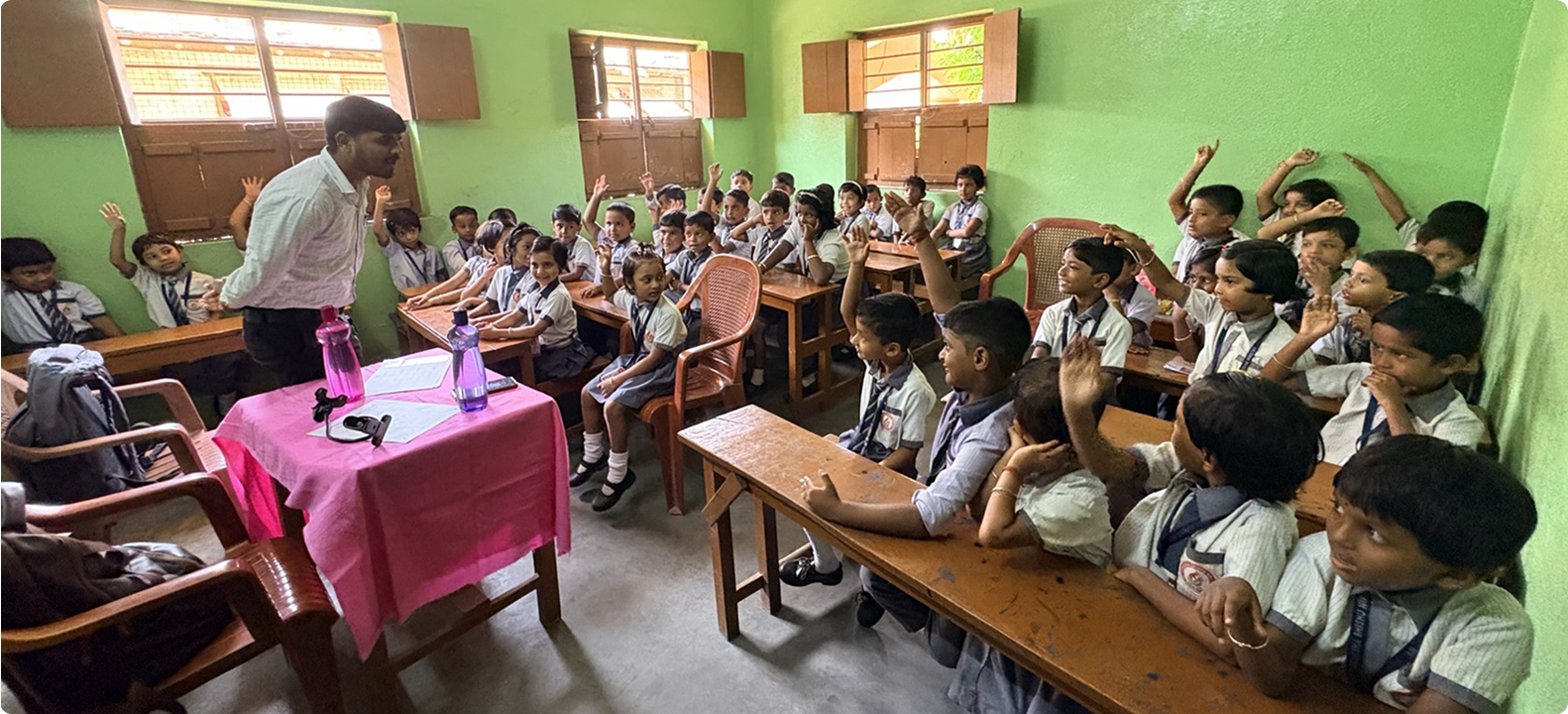
Before the testing, a session in the classroom. Note the hands.
A Hundred Children, One at a Time
We started at LKG and worked upward: KG 1, KG 2, Standard 1, 2 and 3. On the first day alone we got through close to a hundred students.
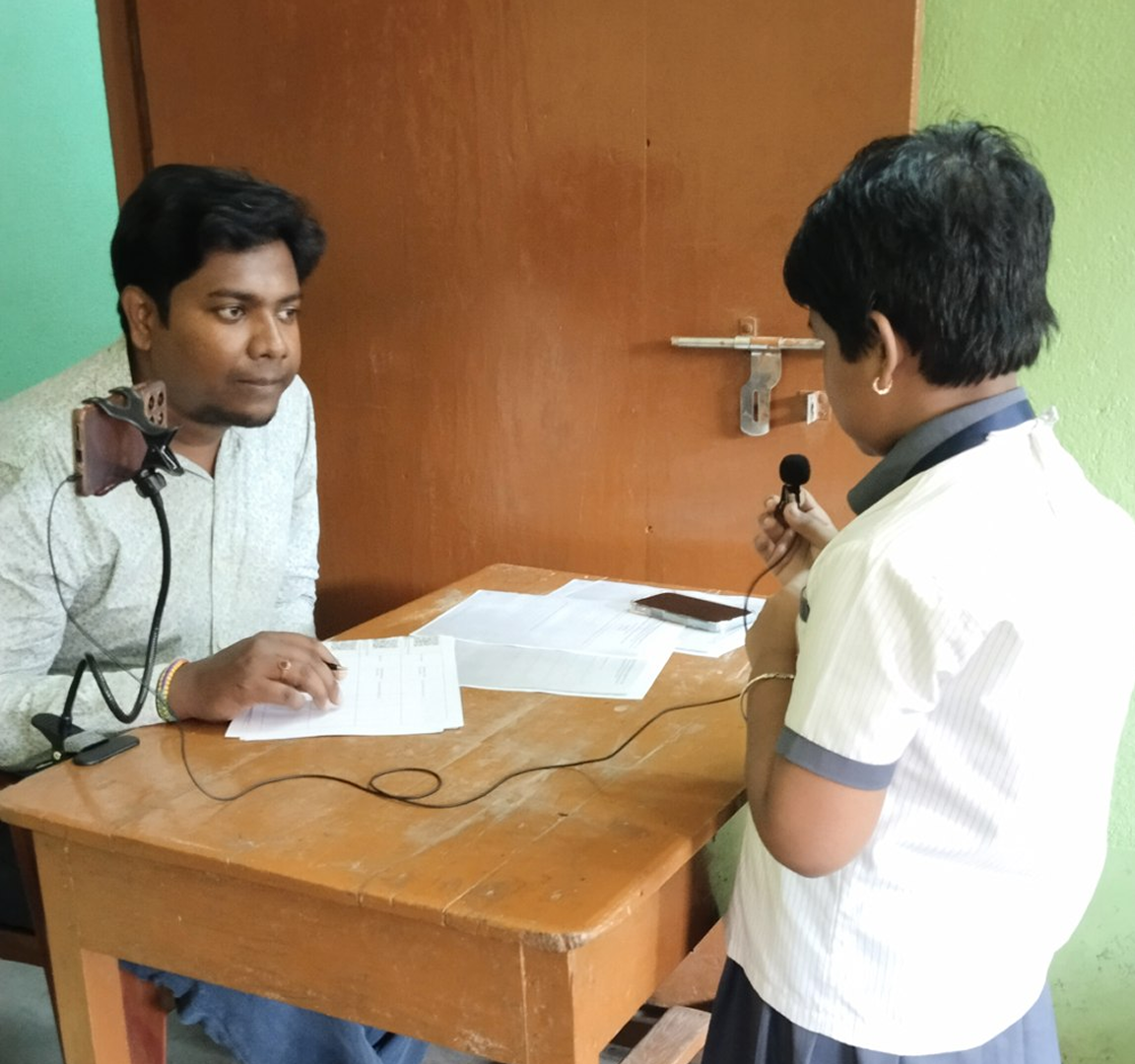
The method has changed since the earlier rounds, and this is the part worth recording. The test is no longer only a tick on a sheet. Each child is recorded on video, individually, with the session identified by a QR code, and the recordings go to our server.
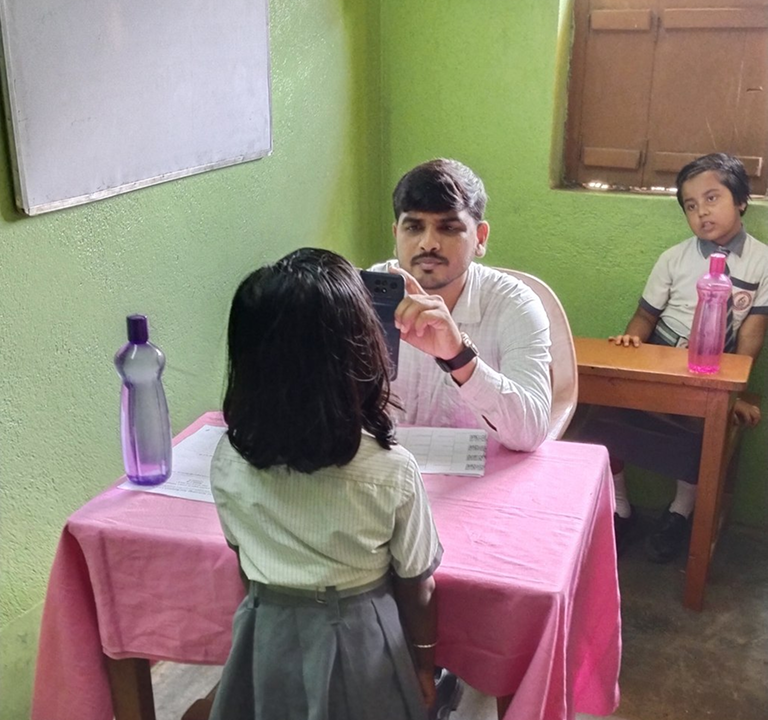
One child, one examiner, one phone recording. The desk is borrowed; so are the phones.
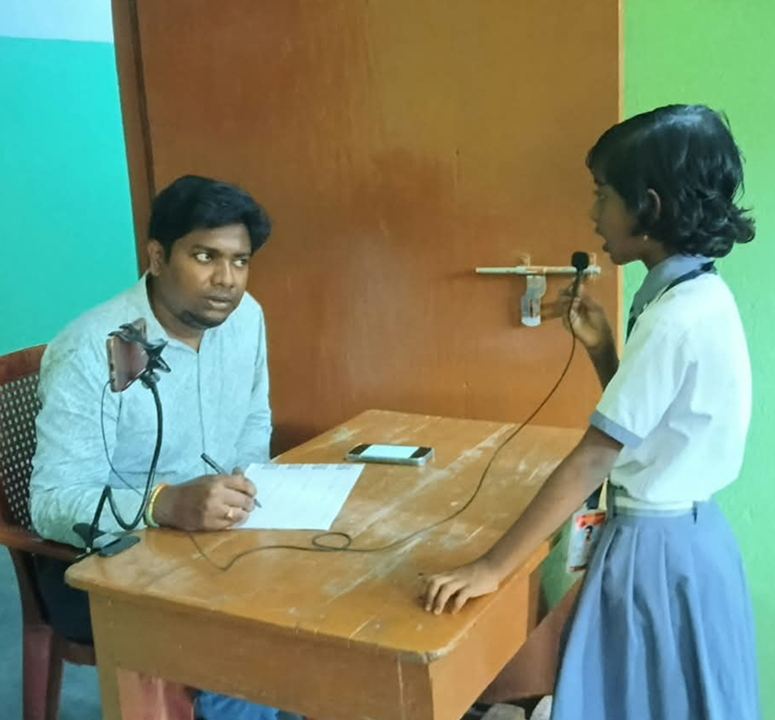
A clip-on microphone, because a classroom is a noisy place and a child's voice is quiet.
The paper record still gets filled in. The video is in addition, not instead.
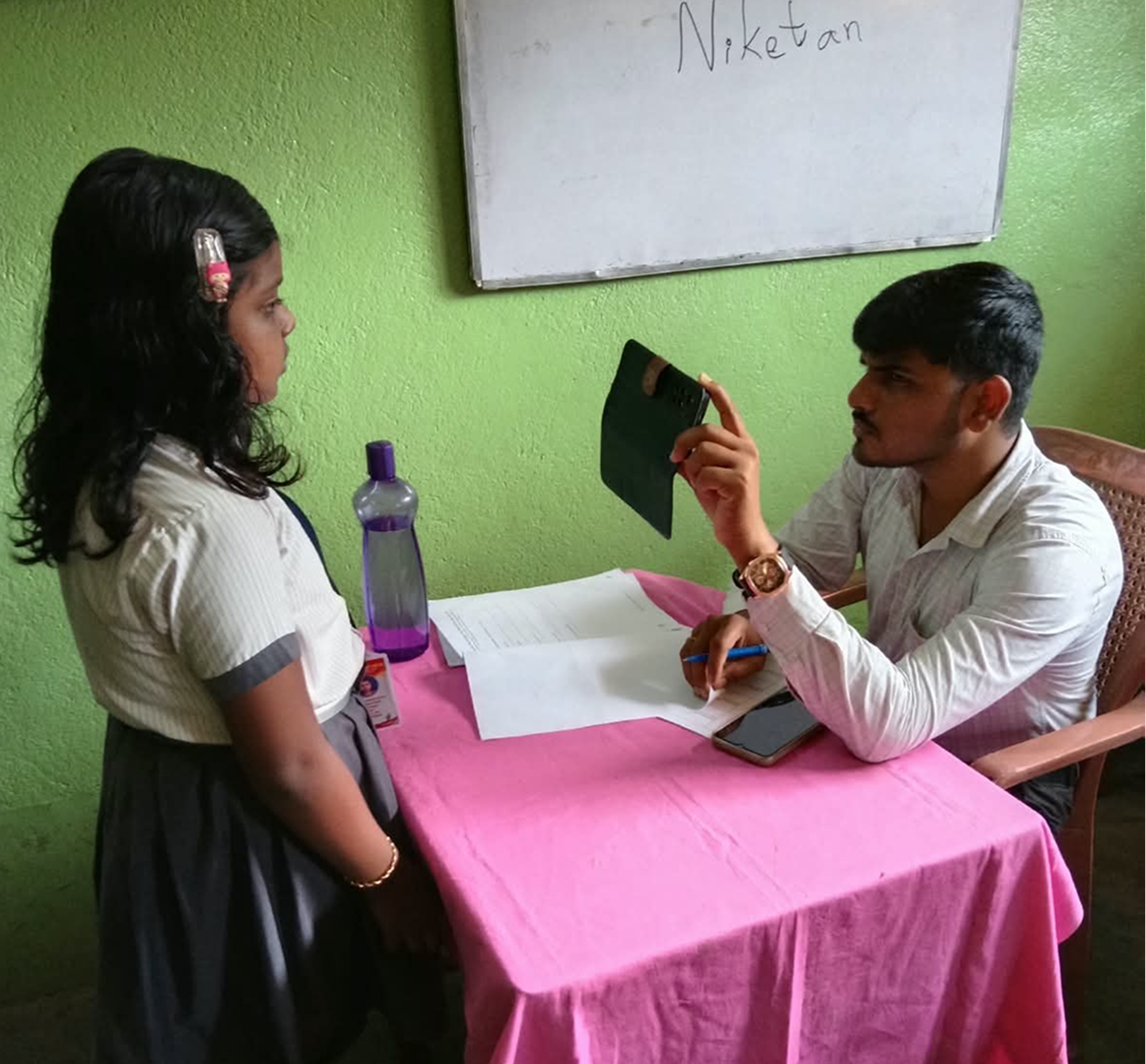
The cards the test is built around.
The reason for the video is simple: a score on a sheet is a claim, and a recording of the child actually reading is evidence. It means that in six months we can put the two side by side and show a parent, a principal or ourselves exactly what changed.
We did not have phones of our own for this. We borrowed the teachers' — which turned out to matter.
The impression during the testing was good. The field executive's own words:
"Maximum students are performing very well... teachers were very prepared from the earlier, and they are giving exactly positive training to the students."
He connects that directly to the trophies handed out that morning. Whether the award is cause or consequence is not something a day of testing can settle — but the data to settle it now exists, which is new.
Seventy-One Videos
Here is where the day stopped being tidy.
On the second morning, part way through the class 1 tests, we noticed that one of the two borrowed phones was not behaving. Khairul's recordings, made on Shostika ma'am's phone, were uploaded to the server normally. The recordings on the second phone were not. They sat in the app marked pending.
By the end of the session the number was 71 videos.
Seventy-one children, tested and recorded, whose evidence existed only on a teacher's personal handset — with no copy anywhere else. If that phone had been dropped, wiped or reset, two days of testing would have been gone, and there is no way to retake a diagnostic honestly once children have seen the cards.
"This was the worrying situation at that moment."
We asked the teacher to leave the app open and keep her mobile data on so it could sync. It did not work. I got home, checked the server, and the videos still were not there. I called her again — leave the app running, keep the data on. Still nothing.
I talked it through with Suvajit, who had an idea worth trying.
The next morning the teacher went into school and connected her phone to the school's Wi-Fi. Every video uploaded on its own. All 71. The problem was never the app — it was that a rural mobile connection cannot push that much video, and the app had been quietly retrying and failing all night.
"So the problem was resolved, and our diagnostic test video for 9th and 10th September was uploaded successfully."
What This Day Was Actually About
Two things happened at Palashipara that belong together.
In the morning, two teachers were told in front of their entire school that they were good at their jobs. In the afternoon and the next day, a hundred of the children those teachers taught sat down one at a time and showed us what they could actually do — on video, permanently, where it can be checked.
Praise and evidence, on the same day, in the same building. The first is worth very little without the second.
And a note to ourselves: the evidence nearly did not survive the journey home. Two days of work hung on one borrowed phone and a weak signal. That is a fixable problem, and now we know how to fix it.