



Field diary — 14th September 2026, Lakshminarayanpur, Bhagwangola
There is a particular assumption people carry about rural schools, and this day took it apart twice.
The demo was booked for 11 a.m. at The World Islamic Mission, at Lakshminarayanpur in Bhagwangola block. Forty kilometres from my home. A hundred and twenty from Khairul's. He came in on the 8:23 local train, and I picked him up from the bus stop.
Not on the Map. Again.
Twenty kilometres of main road, and then the village roads begin.
"The village road is very congested and very confusing for us, because the school is not listed on Google Maps. So it is very difficult to find a school."
This is now the third school in these diaries that does not exist as far as Google is concerned. You stop being surprised by it and start treating it as the normal condition of the work.
What follows is the part worth being honest about:
"After going 10 kilometers we went in the wrong direction, and we went almost 10 to 15 kilometers in the wrong direction. So after going that way we feel that we are not going towards the right way."
Fifteen kilometres out, fifteen back. On village roads chewed up by heavy rain:
"Due to heavy rainfall the village road became very bad, too many holes are there, so it became very disturbed while riding my bike."
We asked directions from a lot of people. As at Mizan Academy in August, "none of them guided properly." It took more than two hours from Berhampore to cover a journey that should have taken one.
The Smart Board Was Already on the Wall
We arrived to find the teachers ready and waiting — no scramble, no confusion about why we were there. The principal, Mrs. Shahina Sultana, runs the school's operations day to day. The owner, Mr. Minar Mijanur, was not there; he teaches at a nearby government primary school.
We agreed with the principal to begin with the LKG class. And then the first assumption fell over:
"After reaching the class we saw that a smart board was installed there. So we do not need to install our projector, because they already have the gadgets."
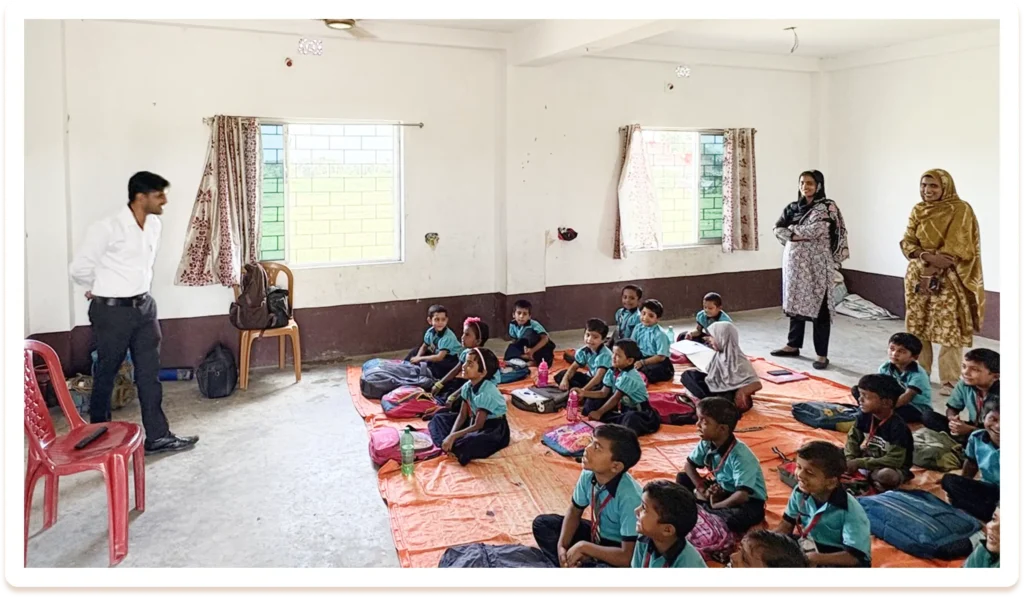
The LKG room. No desks, no chairs for the children, an orange tarpaulin on a concrete floor — and a screen already mounted on the wall.
Read that photograph properly. The children sit on a tarpaulin because there are no desks. There is also a working display on the wall, ready to take our content. Both things are true at once, and anyone who has only ever seen one of them has the wrong picture of what a rural school is.
Khairul took the LKG session — phonics, blends and reverse blends, video comprehension, conversation practice — working through the sections step by step with the principal and several teachers watching from the back.
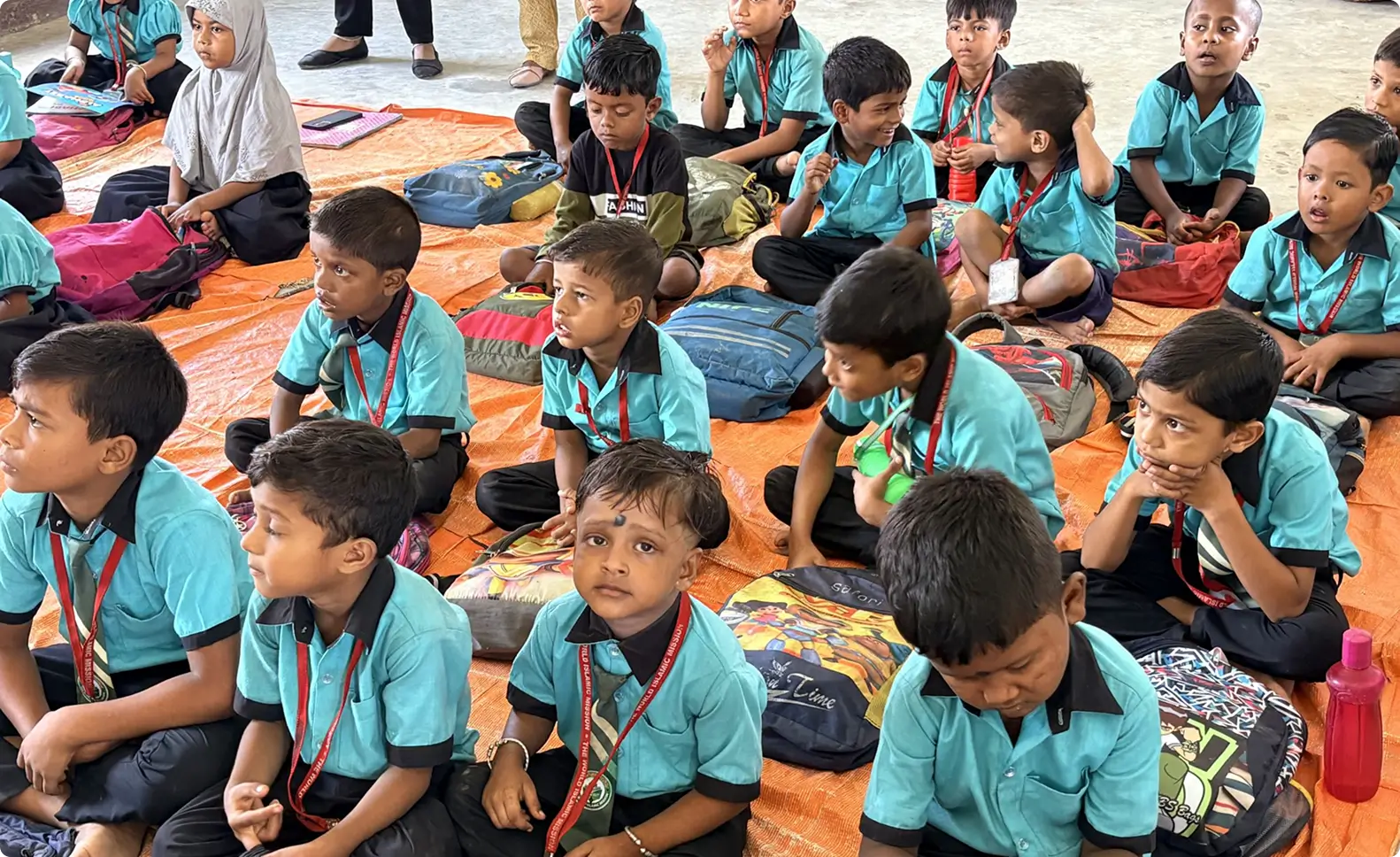
LKG, mid-session.
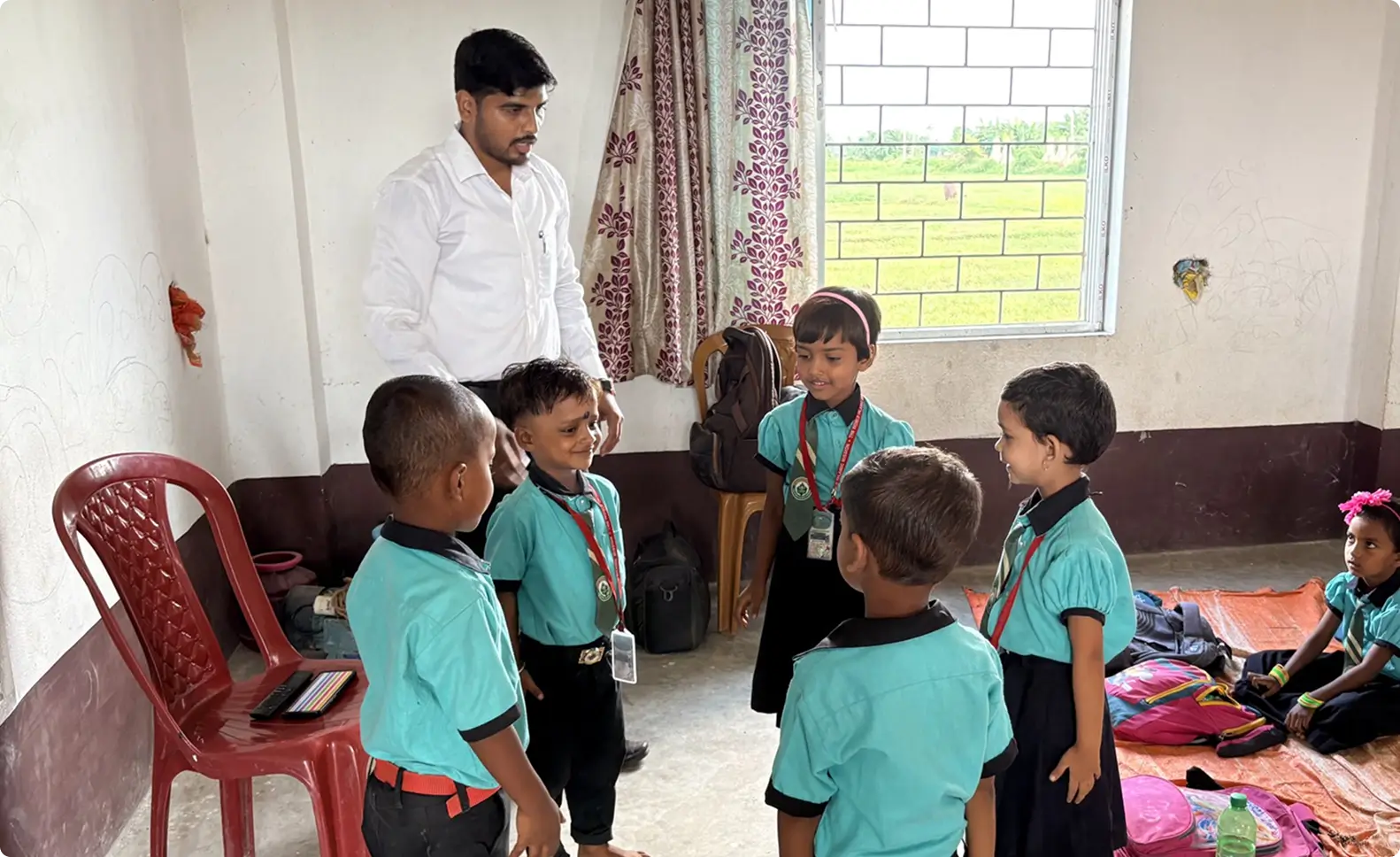
The activities are not a demonstration performed by children. They get up and do them.
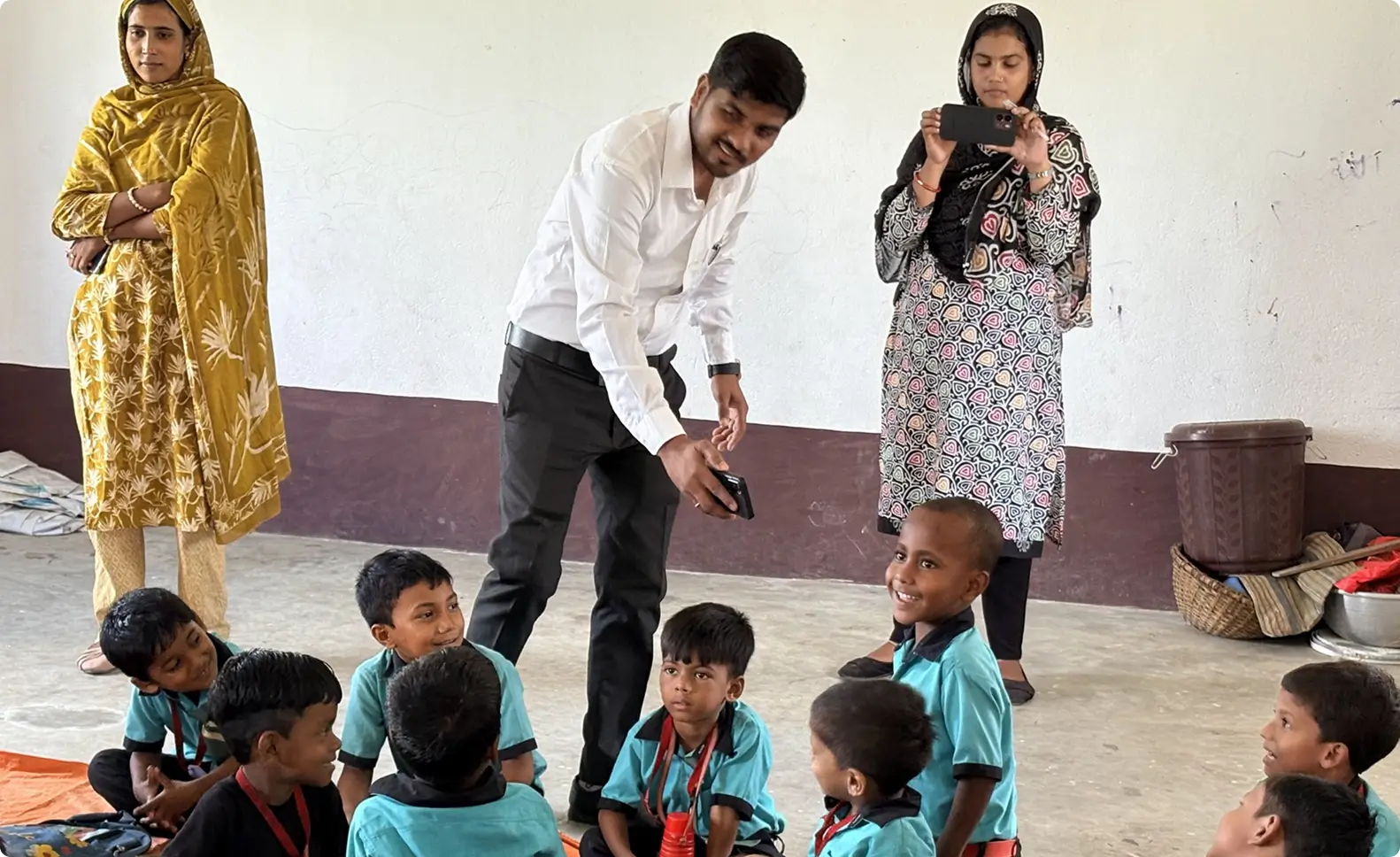
One of the teachers filmed the session on her phone — usually a good sign.
"Everyone enjoyed the session."
Then the Teachers Asked for More
This was not in the plan.
After the LKG demo we went to the principal's room, and some of the assistant teachers asked whether we would do it again — this time for the older students, classes 5 to 10. The school has an auditorium.
So the second assumption fell over too:
"After reaching the auditorium we saw that they already had a projector, proper sound system over there, and many students were there."
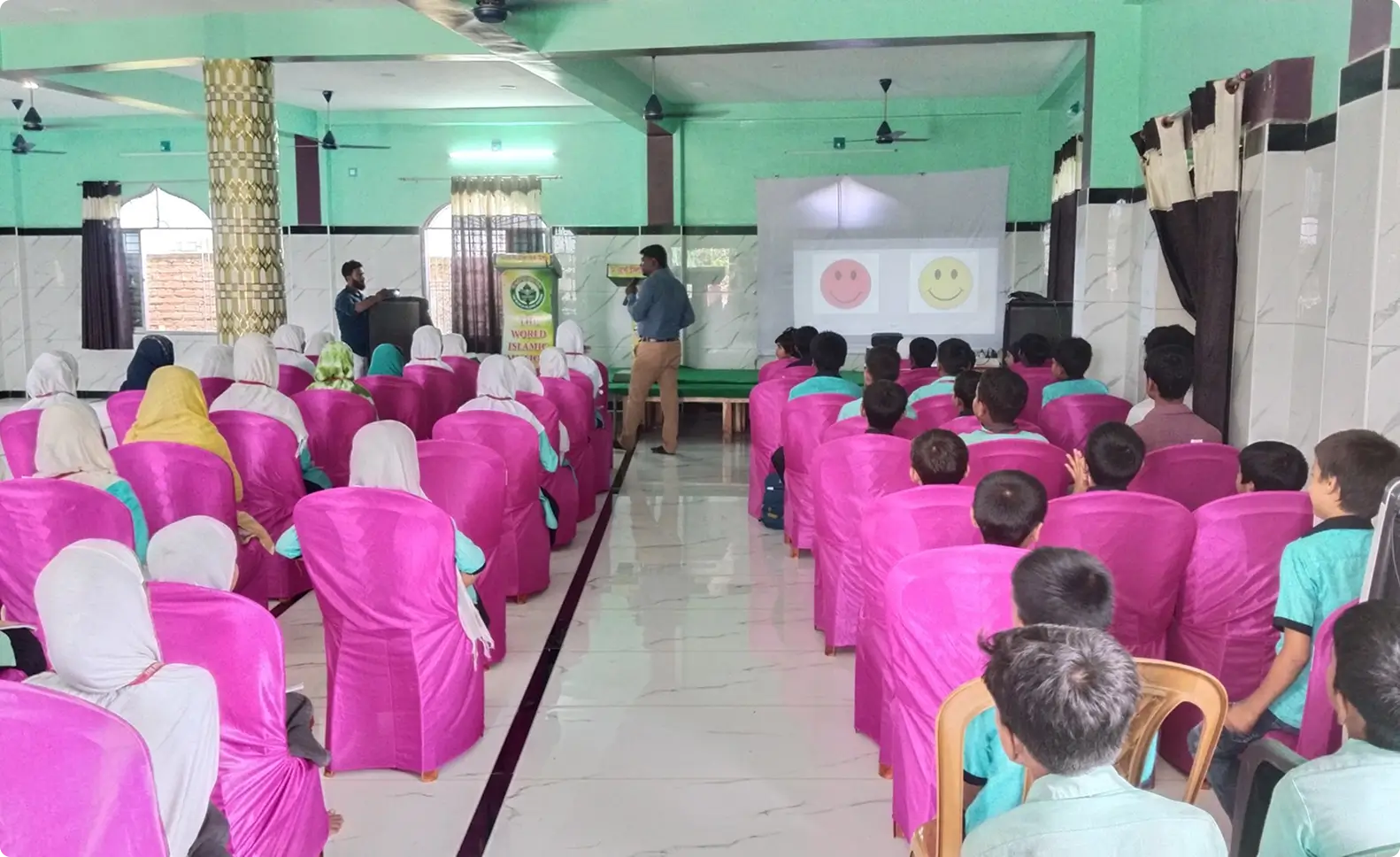
The auditorium. Projector, screen, sound system, and a full house — assembled at an hour's notice.
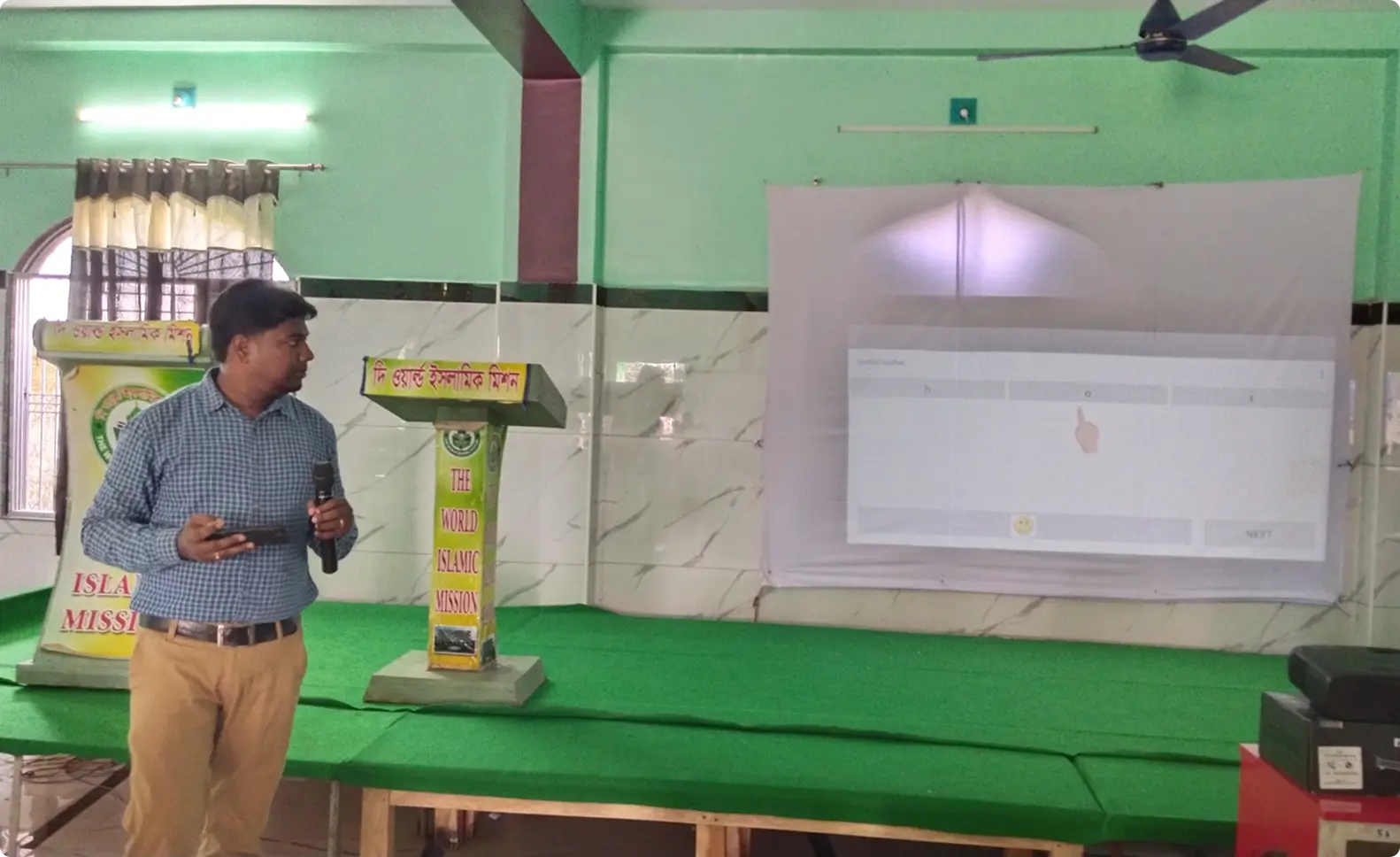
The same material, scaled up from forty children on a floor to a hall of secondary students.
I took that session. The material is the same at its core but it has to be pitched differently, and the thing I will remember is that it held — a room of class 5 to 10 students, at the end of their school day, with a visitor they had never met.
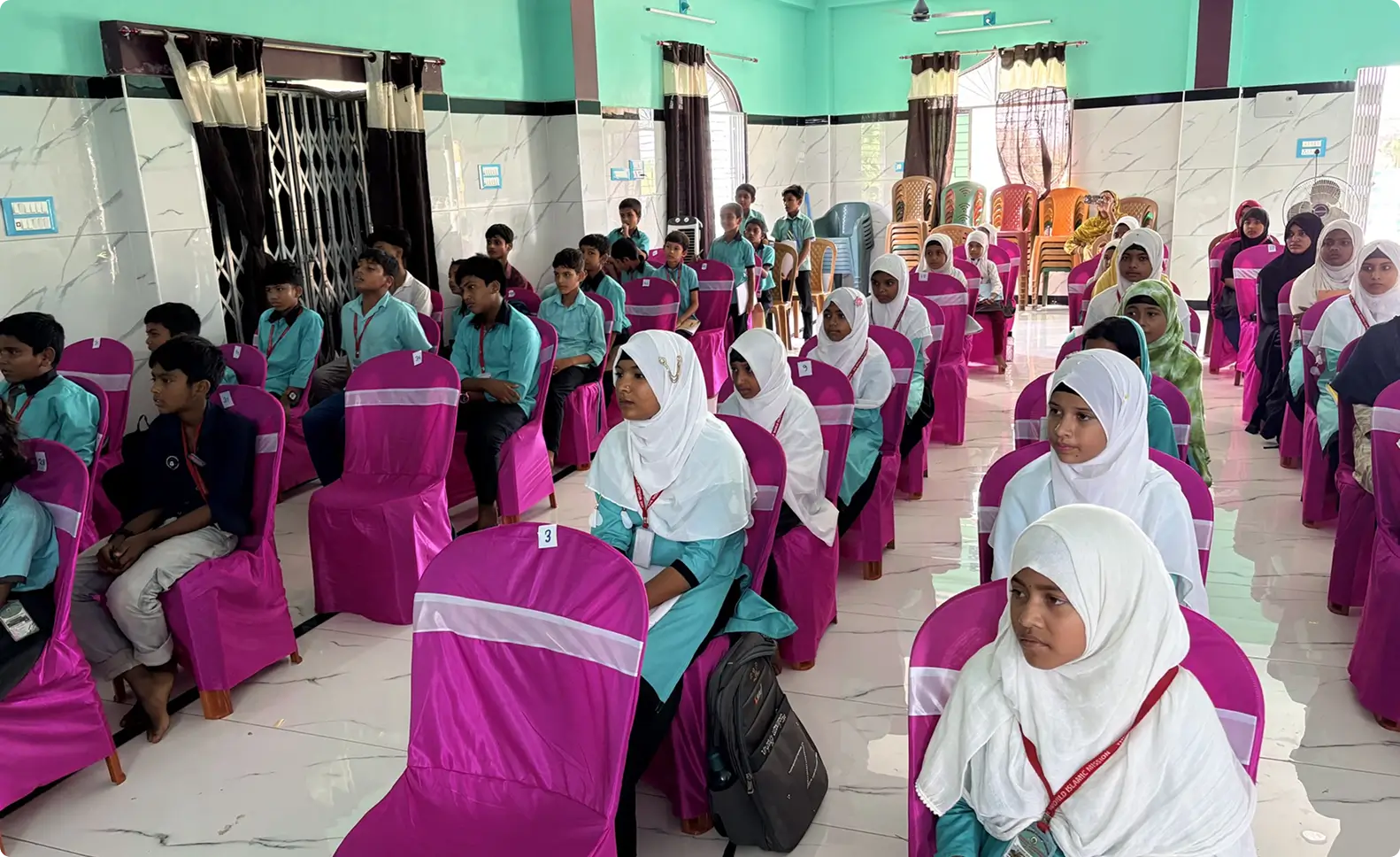
Classes 5 to 10, in a session that was not on anyone's timetable that morning.
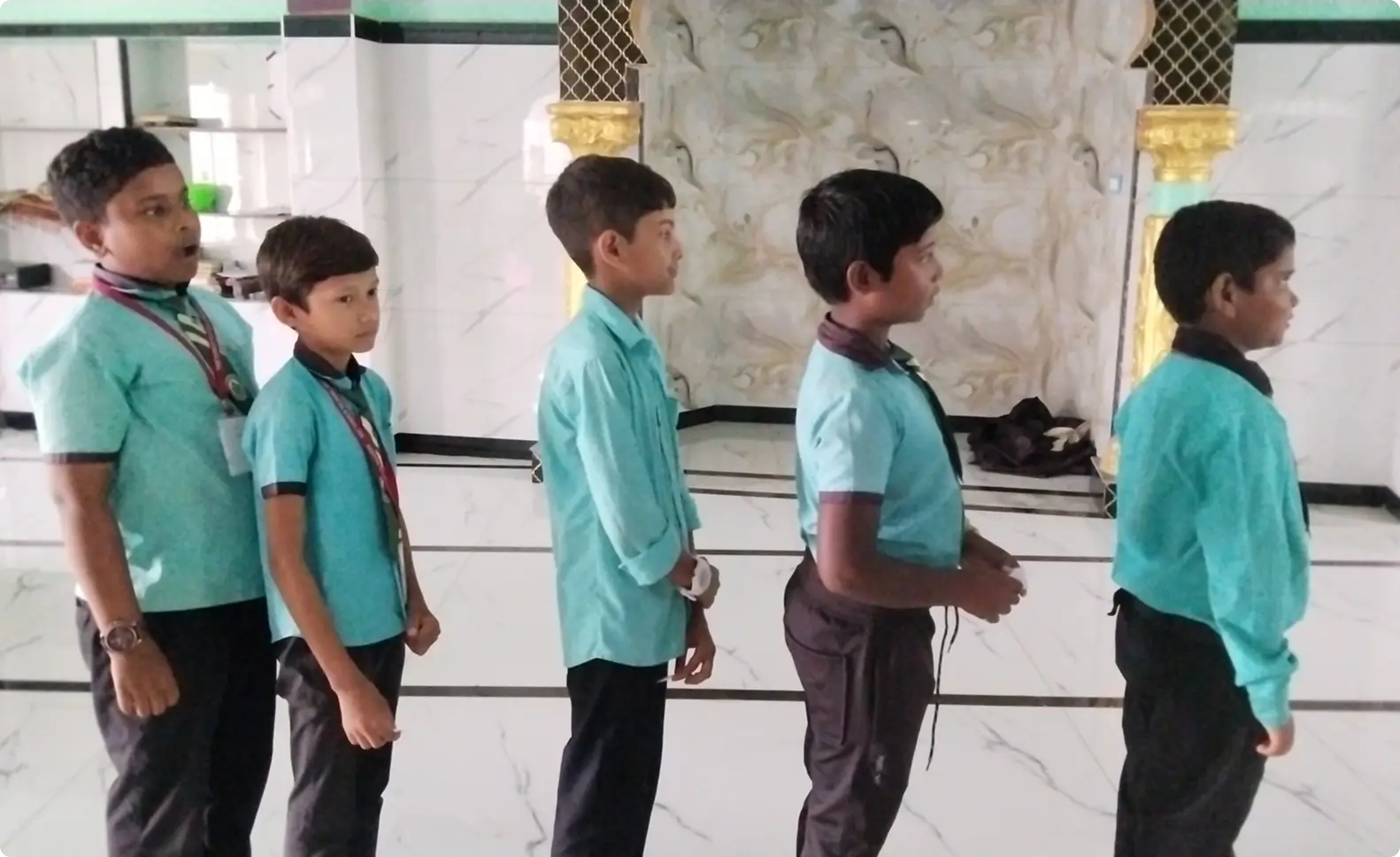
Up on their feet in the hall, same as the five-year-olds.
What the Principal Said
Afterwards, back in the principal's room, Mrs. Sultana was generous about the teaching method itself rather than just the novelty of the visit — which is the appreciation that actually counts, because it came from someone who watched both sessions end to end.
Then the practical part. The school is working through the paperwork for its NOC, which she expects to complete during September. Once that is done she will call us in October to begin registration, with a view to running the Hi-Tech class programme from the 2027 session.
That is a real commitment with real dates attached, which is more than most first visits produce.
The Way Home
One last line from the recording, and it is my favourite thing in it:
"We reach our home, and this time we reach properly, because we remembered the road."
No wrong turn on the way back. The fifteen kilometres in the wrong direction that morning were not wasted — they were the price of learning a route that is not on any map, and we will not pay it twice.
That is most of what this job is. Somebody has to drive down the unmarked road the first time, so that it is known.